
Sunday Morning, October 14, 2018 – Robert Edward Lee
As Kris Kristofferson sang I am probably wasting my time “talking to the people who don’t listen to the things that I am saying, thinking someone’s gonna care.” But I am going to try.
If the only attribute you know about Robert E. Lee is that he was a Confederate General and leader of the Confederate Army during the American Civil War, then as they say “You don’t know jack.”
Note: Academic regalia now on. I do not care if you consider your political views conservative or liberal. When one studies history, you are taught to never evaluate a time period of the past with the social values held today. It is always 20/20 vision when looking backwards in history. Therefore any statements today regarding any individual and the social mores and values of over 150 years ago should be considered null and void historically or accurately taken into the historical context of the time period.
What else do you know about Robert E. Lee? If you do have an interest in this great individual, I encourage you to read this book entitled Lee-The Last Years by Charles Bracelen Flood.
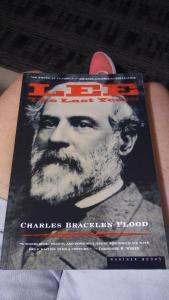
It begins when Lee leaves Appomattox and begins his journey home to Richmond on Traveller. Horse lovers, Traveller plays a critical role in Lee’s life and in history. He is mentioned prominently in the book and died shortly after his owner. Note: Lee preferred the British spelling with two “L’s” rather than the American spelling with one.
You can follow Lee’s short, but intense journey as president of Washington College in Virginia – now Washington and Lee University. The reforms he made at the college in curriculum, instruction and the educational administration of an institution of higher education were visionary and standard setting for colleges and universities of the South today.
Among the many rebuilding and reform efforts for the Commonwealth of Virginia and Washington College, he oversaw the building of the chapel on campus because he was a deeply religious man and wanted the college to reflect Christian beliefs. His angst regarding the loss of his United States’ citizenship and the constant possibility of a trial for treason certainly added to his early death.
As the author of Lee points out, “if Lee were not remembered for his military leadership, he would be remembered as a great educational leader.” Perhaps, we should try to remember him that way. It might be less dividing.
Academic regalia off now. Happy Sunday.


 Here's What I'm Thinking